First Appearance

First Appearance of Black Canary

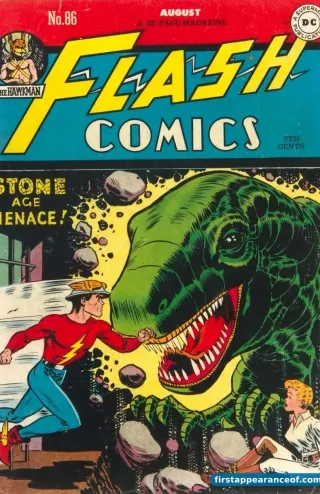
Flash Comics #86 (1947). DC's Canary Cry crimefighter: a Golden Age original named Dinah Drake, and the daughter, Dinah Laurel Lance, who inherited the mask and the mantle.

By Atomm Updated

Flash Comics #86 (1947), the issue that introduces the original Black Canary, Dinah Drake, in a Johnny Thunder backup story.

Firsts Timeline

  1. First Appearance of Dinah Drake August 1947

    Flash Comics #86

    By Robert Kanigher, Carmine Infantino

    The original Black Canary, Dinah Drake, debuts as a supporting character inside the Johnny Thunder feature, written by Robert Kanigher and drawn by Carmine Infantino. She had no superpowers at first, just judo and detective work. By Flash Comics #92 (1948) she had taken over the feature and landed her first cover.

    Read the full breakdown
  2. First as Dinah Laurel Lance October 1983

    Justice League of America #219

    By Roy Thomas, Gerry Conway, Chuck Patton

    A 1983 retcon by Roy Thomas and Gerry Conway, drawn by Chuck Patton, splits the long-running modern Black Canary off as Dinah Laurel Lance, the daughter of the original Dinah Drake. It was the device that explained the sonic Canary Cry and why the modern heroine had not aged out of the Golden Age.

    Read the full breakdown

Quick Facts

Debut
Flash Comics #86 (August 1947) as Dinah Drake. The daughter, Dinah Laurel Lance, is split off in Justice League of America #219 (1983).
Real name
Dinah Drake (original); Dinah Laurel Lance (daughter)
Creators
Robert Kanigher and Carmine Infantino (Dinah Drake, 1947). Roy Thomas and Gerry Conway (the 1983 daughter retcon).
Publisher
DC Comics
First ally
Johnny Thunder, in whose feature she debuted; later Green Arrow and Oracle
Team affiliations
Justice Society of America, Justice League of America, the Birds of Prey

Black Canary is a DC legacy identity held by two women. The original, Dinah Drake, first appeared (1st app) in Flash Comics #86 (August 1947), created by writer Robert Kanigher and artist Carmine Infantino, in a Johnny Thunder story. The modern, sonic-powered Black Canary is her daughter, Dinah Laurel Lance, split off as a separate character by a 1983 retcon in Justice League of America #219 by Roy Thomas and Gerry Conway. Most stories since use the daughter, who co-founds the Birds of Prey.

Creation Story

Black Canary is two characters wearing one mask, and the confusion is older than most readers realize. The original, Dinah Drake, debuted in Flash Comics #86 (August 1947), created by writer Robert Kanigher and artist Carmine Infantino. She did not arrive as a headliner. She showed up inside the Johnny Thunder feature as a striking supporting player, apparently on the wrong side of the law, before turning out to be working against the crooks. She had no powers, only judo and a detective’s instincts, and readers liked her enough that she pushed Johnny Thunder out of his own strip within a few issues.

The complication came later. The Golden Age Black Canary was a DC Justice Society member, which placed her firmly in the 1940s. By the time the modern Justice League wanted to use her, decades had passed, and a Golden Age crimefighter should have been far too old to be a frontline hero. DC’s answer, in 1983, was to split the character in two: the original Dinah Drake, and her daughter Dinah Laurel Lance, who had inherited the name. That retcon is why the first appearance and the popular version are not the same person.

First Appearance of Dinah Drake: Flash Comics #86

Flash Comics #86, cover-dated August 1947, is the first appearance of Black Canary, and like a lot of Golden Age debuts it is easy to overlook because she is not the star of the book. She appears as a supporting character in a Johnny Thunder story, drawn by Carmine Infantino and written by Robert Kanigher. The reader is meant to read her as a glamorous criminal before the twist lands. Two issues later, Flash Comics #92 (1948), she had taken over the feature outright and earned her first cover, and that issue filled in the origin: Dinah Drake, a black-haired florist involved with police detective Larry Lance.

For collectors, that makes the Canary a two-book story at the front end. Flash Comics #86 is the true first appearance and the scarcer key, a 1940s book from a publisher whose Golden Age print survivors are thin on the ground. Flash Comics #92 is the first cover and first solo feature, the second key readers chase. Both are the kind of Golden Age books a first-appearance archive exists to pin down, precisely because the debut is buried in someone else’s strip.

Flash Comics #86 vs Justice League of America #219

The two key Black Canary books introduce two different women, so it helps to lay the issues side by side.

Flash Comics #86 (1947)Justice League of America #219 (1983)
What happensThe first Black Canary debuts as a supporting character inside a Johnny Thunder storyA retcon recasts the modern Black Canary as a separate, second-generation character
Who it isDinah Drake, the Golden Age originalDinah Laurel Lance, her daughter
On the coverNo; her first cover comes two issues later, in Flash Comics #92 (1948)A sitting member of the cover-billed Justice League
Powers shownNone; judo and detective workThe sonic Canary Cry
Collector significanceThe true first appearance and the scarcer keyThe first appearance of the daughter as a distinct character

If the question is which book is the first Black Canary, the answer is Flash Comics #86, and the Canary in it is Dinah Drake. If the question is which Black Canary modern stories, films, and shows build on, the answer is the daughter, Dinah Laurel Lance, the version codified in JLA #219. The mother is the first appearance; the daughter is the character most people mean. Collectors track the 1947 debut; readers meet the version they know in the modern books.

First as Dinah Laurel Lance: Justice League of America #219

The daughter was not introduced from scratch so much as carved out of the existing character. In Justice League of America #219 and #220 (1983), Roy Thomas and Gerry Conway, with art by Chuck Patton, retconned the modern Black Canary into Dinah Laurel Lance, the daughter of the original Dinah Drake. The story used a convoluted device involving the Justice Society’s Thunderbolt to explain the switch, and while the mechanics were later discarded after Crisis on Infinite Earths, the core idea stuck: the Black Canary in the modern League is a second-generation hero.

That recast is also where the modern character’s identity settled. The sonic Canary Cry, absent from the powerless Golden Age original, was tied to the daughter, and Dinah Laurel Lance went on to anchor stories the original never could. She co-founded the Birds of Prey with Oracle in the late 1990s, and her long romance with Green Arrow culminated in their 2007 wedding. When a film or a television series reaches for Black Canary, it is almost always this version, the daughter, that they build on.

For collectors

The collector hierarchy mirrors the character’s split history. Flash Comics #86 is the key, the genuine first appearance of Black Canary, scarce in the way most 1947 books are and chased precisely because the debut hides inside a Johnny Thunder story. Flash Comics #92 is the firm second key: her first cover and the first time she headlined the feature. After that, the important books are story keys rather than scarcity plays. Justice League of America #75 moves her to the modern League, the 1983 retcon books explain the two-Canary structure, and the Birds of Prey and wedding issues mark the daughter’s defining runs. The 1947 debut is the anchor; everything else is the lineage built on top of it.
Key subsequent appearances

After the debut, these are the issues collectors and historians reach for next.

  1. 1948

    Flash Comics #92

    First Cover

    Black Canary takes over the feature that had been Johnny Thunder's and lands her first cover, drawn by Carmine Infantino. The issue fills in the original origin: Dinah Drake, a black-haired florist in love with police detective Larry Lance. Treated as the second key Black Canary book after her debut.

  2. 1969

    Justice League of America #75

    Crosses to Earth-One

    Black Canary leaves the Earth-Two of the Justice Society and joins the Justice League of America, the move that turned the Golden Age character into a fixture of DC's modern flagship team. This is the version the 1983 retcon would later reframe as the daughter.

  3. 1996

    Black Canary/Oracle: Birds of Prey #1

    Birds of Prey

    The one-shot that first pairs Black Canary with Oracle, the post-injury identity of Barbara Gordon. The partnership clicked well enough to launch an ongoing Birds of Prey series in 1999 and became one of the defining team-ups of Dinah's career.

  4. 2007

    Green Arrow/Black Canary Wedding Special #1

    The Wedding

    Judd Winick and Amanda Conner stage the long-delayed marriage of Dinah Lance and Oliver Queen, capping a relationship that ran back decades. It spun directly into an ongoing Green Arrow and Black Canary series.

In adaptations

Film, TV, animation, and game appearances.

  1. 2002

    Birds of Prey

    TV

    Starring:Rachel Skarsten

    The short-lived WB series gave the Canary lineage an early live-action outing, with Skarsten as a young Dinah, years before the character reached a wider screen audience.

  2. 2007

    Smallville

    TV

    Starring:Alaina Huffman

    Huffman recurs as Dinah Lance, a fishnet-clad vigilante and broadcaster who tangles with and eventually allies with Clark Kent's circle, the first sustained live-action Black Canary.

  3. 2012

    Arrow

    TV

    Starring:Katie Cassidy

    The CW series splits the Canary across the Lance family, with Cassidy's Laurel Lance eventually taking up the Black Canary mantle. Sara Lance and a later Dinah Drake carried the Canary name across the wider Arrowverse.

  4. 2020

    Birds of Prey

    Film

    Starring:Jurnee Smollett

    Smollett plays Dinah Lance as a Gotham club singer whose Canary Cry surfaces over the course of the film, the first big-screen Black Canary and a take built squarely around the sonic power.

Frequently asked questions

The questions readers and collectors ask most.

What is Black Canary's first appearance?

Black Canary's first appearance is Flash Comics #86 (August 1947), where the original, Dinah Drake, debuts as a supporting character in a Johnny Thunder story by writer Robert Kanigher and artist Carmine Infantino. Her first cover comes two issues later, in Flash Comics #92 (1948).

Who is the real first Black Canary, Dinah Drake or Dinah Laurel Lance?

Dinah Drake is the first Black Canary, the Golden Age original from 1947. Dinah Laurel Lance is her daughter, introduced by a 1983 retcon to explain how a Golden Age heroine was still young in modern stories. So the first appearance is Drake's, but the Black Canary most readers picture today is the daughter, Lance.

Why are there two Black Canaries?

Because DC needed to reconcile a Golden Age debut with a still-youthful modern character. In Justice League of America #219 and #220 (1983), Roy Thomas and Gerry Conway retconned the modern Black Canary into Dinah Laurel Lance, the daughter of the original Dinah Drake, rather than the same woman aging forty years. Later continuity simplified the mechanics but kept the mother-and-daughter lineage.

Where does the Canary Cry come from?

The original Dinah Drake had no powers at all; she was a judo expert and amateur detective. The sonic Canary Cry was added during the character's later revival and was given an in-story origin in the 1983 retcon, tied to the daughter, Dinah Laurel Lance. It is now her signature ability.

Did Black Canary marry Green Arrow?

Yes. After a relationship that ran back decades in the comics, Dinah Lance and Oliver Queen married in the Green Arrow/Black Canary Wedding Special #1 (2007), which led into an ongoing Green Arrow and Black Canary series. The marriage was later undone by DC's New 52 continuity reboot.

Related characters