What Metropolis Is
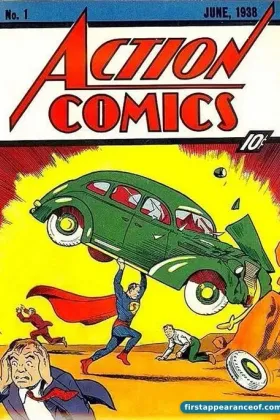
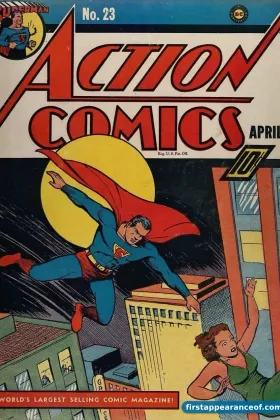
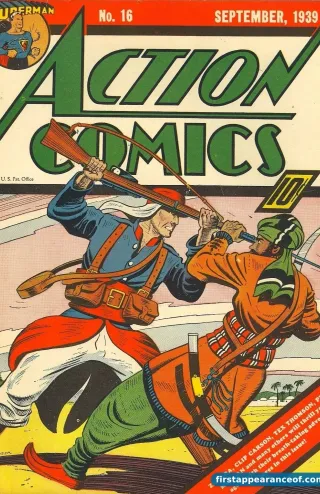
Superman was saving his city for more than a year before anyone called it Metropolis. The stories before it do not use the name, and Action Comics #2 even slips and makes Clark Kent a reporter for the Cleveland Evening News. The name arrives in Action Comics #16, cover-dated September 1939, in a story by Superman’s creators Jerry Siegel and Joe Shuster, and it turned a generic Golden Age backdrop into a place with an identity.
Once the city had a name, the rest of the Superman world could take up an address in it. Clark Kent’s paper began as the Daily Star, which Shuster lettered after the Toronto Star, and became the Daily Planet in 1940.
Where the Name and the Skyline Came From
The skyline is Toronto’s. Joe Shuster lived there until he was ten, and when it came time to draw Superman’s city he reached past Cleveland for it. In his last interview, with the Toronto Star in 1992, he said: “Cleveland was not nearly as metropolitan as Toronto was, and it was not as big or as beautiful. Whatever buildings I saw in Toronto remained in my mind and came out in the form of Metropolis.”
The setting took a longer road. Siegel and Shuster first set the strips in Cleveland and switched to a fictional city when the material was reused for comic books. Later versions pulled the city’s look toward New York City, and Denny O’Neil is credited with picturing Metropolis as Manhattan between 14th and 110th Streets on a bright July day. The name itself is often said to come from Fritz Lang’s film Metropolis, but the sources that repeat it cite no statement from Siegel or Shuster.
Where Is Metropolis?
Nowhere for good. Comics, fanzines, maps and films have put Metropolis in different states since 1939, and two of those placements contradict each other within the same year.
The earliest specific placement came in the same year as the name’s first appearance: Superman #2 (Fall 1939) addresses a telegram to Metropolis, N.Y.
Delaware arrived in 1977, through DC’s in-house fanzine rather than a story. The Amazing World of DC Comics #14, cover-dated March 1977, carried Justice League features guest-written by Mark Gruenwald, then a fan writer and later a Marvel writer and editor. His member profiles put Metropolis in Delaware and Gotham City in New Jersey. That was text in a profile, not a map. Three months later by cover date, an Ask the Answer Man column in Detective Comics #470 (June 1977) put Metropolis and Gotham next to New York City, across the harbor from each other.
Several maps set the two cities across a bay from each other. A 1978 World’s Greatest Super-Heroes Sunday newspaper strip by Martin Pasko and George Tuska drew the East Coast with Metropolis on the south side of the Delaware Bay, a short drive over the Metro Narrows Bridge from Gotham in New Jersey. A 1981 Superboy comic printed a Smallville map with Metropolis and Gotham on either side of a bay very similar to the Delaware Bay. The 1990 Atlas of the DC Universe, a licensed Mayfair Games role-playing supplement by Paul Kupperberg, put Metropolis in Delaware and Gotham in New Jersey. Kupperberg has written that the decision “was not arrived at willy-nilly,” and he names the 1978 strip as his precedent.
New York never left. The Death of Superman (1992) routes Doomsday from Ohio through New York State to Metropolis, and Countdown to Infinite Crisis (2005) places the city in New York State as well. Writing on DC.com in 2024, Alex Jaffe called the city’s location “the most in flux” in a feature on where DC’s cities sit.
Two recent films, as of September 2026, lean toward the bay. Batman v Superman: Dawn of Justice (2016) presented Gotham and Metropolis as twin cities across a bay, implicitly New Jersey and Delaware. James Gunn’s Superman (2025) puts Metropolis in Delaware, down to the Delaware license plate on Lois Lane’s car. “I had to choose somewhere,” Gunn said. “Metropolis has actually been in different places. But it’s been in Delaware before, so I didn’t just make up Delaware.”
In 2026 the Delaware placement turned up in a sitcom. Stuart Fails to Save the Universe, a Warner Bros. Television production for HBO Max (with Chuck Lorre Productions), traps its cast inside a DC comic set in Gotham City in Season 1, Episode 9, “Spoiler: We Couldn’t Get Green Lantern” (September 17, 2026). A few lines after Stuart places the Flash in Central City, the talk turns to the East Coast:
Bert: “Gotham City isn’t New York?”
Denise: “No, and guess what? Metropolis is in Delaware.”
Bert: “No way.”
Stuart: “Way. Amazing World of DC Comics #14. They’re twin cities.”
Stuart has the right issue for the states: #14 set them in Gruenwald’s Justice League profiles, as text rather than a map, and the 1978 strip and later maps drew the pairing across the Delaware Bay. The joke points back to DC’s own lore; it does not settle where the city is.
The City as a Character
Metropolis works as more than a backdrop because Superman’s supporting cast is built into it. The Daily Planet is a Metropolis institution. Lois Lane and Clark Kent work its streets as reporters. Lex Luthor is the city’s other center of power, the one Superman’s clean ideal gets measured against. The city’s optimism is the point: Superman’s home is a place worth saving.
Metropolis and Gotham
Gruenwald’s 1977 profiles put Superman’s city and Batman’s in neighboring states, and maps such as the 1978 strip drew them facing each other across the water. Batman v Superman kept the arrangement on film. The geography suits the contrast. Metropolis is bright and built for daylight; Gotham is gothic and nocturnal, the right home for Batman. A line often credited to Frank Miller, and sometimes to John Byrne, puts it in one sentence: Metropolis is New York by day, and Gotham is New York by night.
Why It Endures
Metropolis has kept its name since Action Comics #16 while its address kept moving, and it can sit across a bay from Gotham or in place of New York, whichever a story needs. Gunn’s 2025 film chose Delaware and said so. Decades earlier, the 1978 Superman film and its sequels stood New York in for it.