What gamma radiation is
Gamma radiation is Marvel’s most reliable accident. In the real world it is a genuine, invisible form of high-energy radiation; in Marvel comics it is the catch-all force that turns ordinary people into super-powered, usually monstrous ones. Since 1962 it has been the company’s favorite way to break a character, the mechanism it keeps reaching for whenever a story needs a new kind of person.
What makes it durable is that it explains almost anything. A bomb, a machine, a blood transfusion: any of them can deliver a dose, and the dose can produce raw strength, a green hide, a swollen brain, or a calm professional, depending on the story’s needs. Gamma is less a fixed power than a permission slip, the Silver Age shortcut that lets a writer turn a person into something else and call it science.
The accident that started it
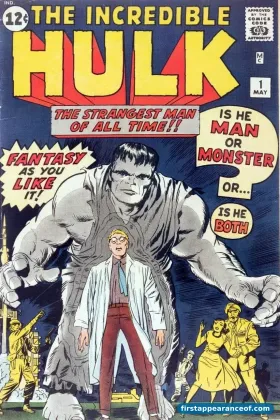
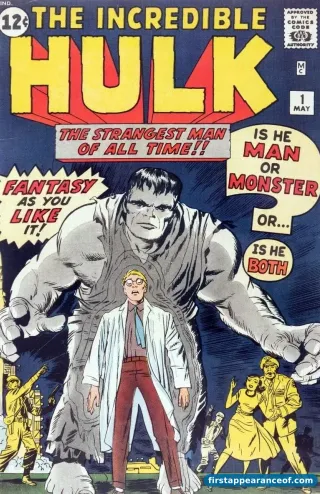
The concept debuts as the gamma bomb, the weapon Bruce Banner designed and then got caught beneath. During the test, Banner sees a teenager, Rick Jones, wander onto the range, and he reaches him in time to shove him to safety but not to save himself. The blast washes him in gamma rays. He survives, which should be impossible, and that survival is the whole franchise: the radiation that should have killed him instead made him the Hulk, a transformation his anger and stress keep pulling back out of him.
The issue treats the science as a given and spends its attention on the man, which set the pattern. Gamma is rarely the subject of a Hulk story. It is the thing that already happened, the line the character cannot uncross.
How it works
The in-universe rules are loose by design. Exposure to gamma radiation rewrites a body, and the result depends on the person more than the dose. Banner becomes a rampaging strongman triggered by emotion. Others keep their minds, or gain genius, or simply turn a new color. There is no consistent formula, because the point of gamma was never consistency. It was reusability.
That reusability is why the concept matters beyond the Hulk. A writer who needs a new heavy can give them a gamma origin and instantly tie them to Banner’s corner of the universe, complete with a built-in rogues’ gallery and a built-in theme: the monster you become versus the person you were.
The gamma family
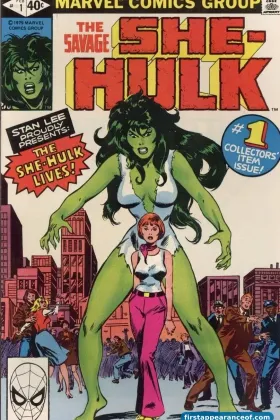
The Hulk is the first and the template, but the gamma mutates are a whole roster. She-Hulk, Banner’s cousin Jennifer Walters, gets her powers from an emergency blood transfusion from Banner and, unlike him, keeps her mind. The Abomination, Emil Blonsky, deliberately dosed himself with more gamma than Banner took and came out stronger but still himself. The Leader, Samuel Sterns, took the genius end of the same lottery rather than the muscle. Doc Samson turned his exposure into a stable, heroic version of the change, and the Red Hulk turned out to be General Thaddeus Ross, a man who spent a career hunting gamma monsters before becoming one. The accident that made the Hulk is the same door all of them walked through.
The big gamma stories
Gamma graduated from origin device to story engine. Fall of the Hulks (2009) and World War Hulks (2010) turned the gamma family into the cast of a crossover, with the Leader and a cabal of super-geniuses called the Intelligentsia scheming against the universe’s smartest minds. Years later, Al Ewing and Joe Bennett’s Immortal Hulk reframed the whole idea as horror: gamma stops being radiation and becomes a metaphysical force tied to a place beyond death, reached through a recurring “Green Door,” which is how the gamma mutates keep returning from the grave. Both runs work for the same reason the concept always has. Gamma was never really a science. It was a premise loose enough to carry whatever the moment needed.
The science it gets wrong
Real gamma rays are the most energetic light in the electromagnetic spectrum, and they sit beyond the range human eyes can see, which means they have no color at all. The Hulk’s green is pure invention. A real human exposed to the radiation Banner absorbed would not gain strength; he would die of acute radiation sickness. The comic knows this and does not care, because gamma was always a storytelling device wearing a lab coat, a way to make transformation sound earned without doing the homework.
On screen
Gamma carried straight into film. The Incredible Hulk (2008), with Edward Norton as Banner, builds its plot around gamma experiments and ends with Emil Blonsky transformed into the Abomination. The radiation has stayed the connective tissue of the Hulk’s screen corner the way it is on the page: the explanation everyone already knows, so the story can get to the person.
Why it endures
Most origin gimmicks are spent once. Gamma is the opposite, because it was built to be reused. It sits alongside Marvel’s other all-purpose origins, the super-soldier serum, the Terrigen Mist, the mutant gene, as one of the handful of mechanisms the universe leans on whenever it needs a new kind of person. For a first-appearance archive, that makes The Incredible Hulk #1 a double debut: the first Hulk and the first dose of the radiation that keeps making more of him.