Creation Story
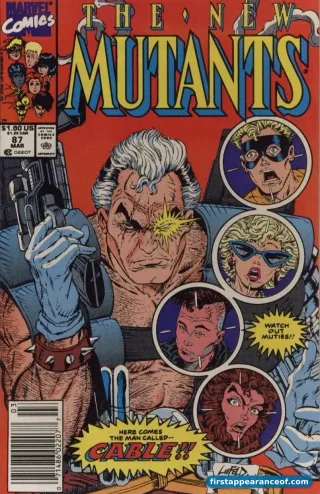
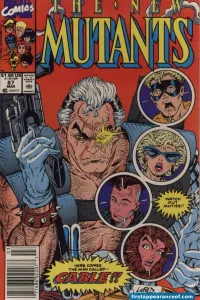
Cable is the character who arrived at the exact right moment for his commercial weight. Rob Liefeld joined The New Mutants as artist in 1989 and within months was plotting the book alongside writer Louise Simonson. Liefeld had a clear vision for the character he wanted to introduce: a cybernetic time-traveler with a massive gun, a grim expression, a techno-organic arm, and a leadership role that would let him redirect the New Mutants away from the juvenile-school-for-mutants frame the book had been running for eight years.
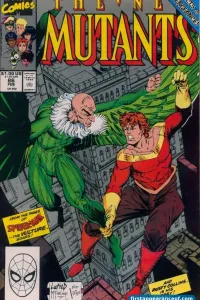
Cable debuts in The New Mutants #87 (March 1990). The single-panel cameo in New Mutants #86 (February 1990) is a silhouetted figure in a dark room, deliberately teasing the full reveal for collectors. Liefeld’s full design, costume, and visual language for the character all land in #87. The issue is a structural pivot: Cable takes over leadership of the team from Xavier’s longstanding guidance, kills off longstanding supporting characters, and reshapes the book’s tone into something harder and more militarized.
The character’s backstory was built backwards. Liefeld did not initially design Cable as the adult son of Cyclops. That identity was tied to Chris Claremont’s long-running Nathan Summers plot, which had been running in parallel across X-Factor and related books since the mid-1980s. The Cable-is-Nathan reveal came together across several writers’ contributions: Scott Lobdell, Fabian Nicieza, and Louise Simonson each added pieces between 1990 and 1993, with the reveal fully canonized by the time of the Cable solo title launch in May 1993.
Why Cable launched X-Force
Cable’s arrival in The New Mutants was the direct setup for the X-Force #1 launch in August 1991. The New Mutants book ended with issue #100 (April 1991) after Cable reshaped the team into a paramilitary unit. X-Force #1 shipped with five polybagged trading-card variants and moved over five million copies, one of the single best-selling American comic books of all time.
The commercial phenomenon is hard to overstate. X-Force #1 and the surrounding Liefeld-era Marvel books (X-Men #1 by Jim Lee, Spider-Man #1 by Todd McFarlane) defined the speculator boom of the early 1990s. Cable was the catalyst for the X-Force book; the X-Force book was one of the books that broke Marvel’s distribution system and eventually contributed to the 1996 Marvel bankruptcy.
Collector context
The New Mutants #87 is the defining Cable key and the single issue most serious Cable collectors chase first. The newsstand variant trades at a significant premium over the direct-market edition because newsstand print runs in 1990 were substantially lower; high-grade CGC copies with newsstand indicia can carry 2x to 4x the direct-market pricing.
The New Mutants #86 (cameo first) is a cheaper entry for collectors who want a Cable-first without the full New Mutants #87 price. The cameo premium is modest relative to #87 but the book is still meaningfully more valuable than the surrounding New Mutants issues.
X-Force #1 (1991) is widely available in high grade because of the massive print run, but first-print copies with the trading-card polybags intact carry a collectibility premium. The Punisher variant trading card inside first prints is the key variant collectors flag.
Cable & Deadpool #1 (2004) is the modern Cable key and picked up sharply after the 2018 Deadpool 2 film. Available in high grade but not priced as a flagship-era book.